

Modulo Furniture Website/App
I designed a furniture website/app that makes it easy to discover, compare, and visualize pieces in your space, creating a smooth and stress-free shopping experience.
Year
2026
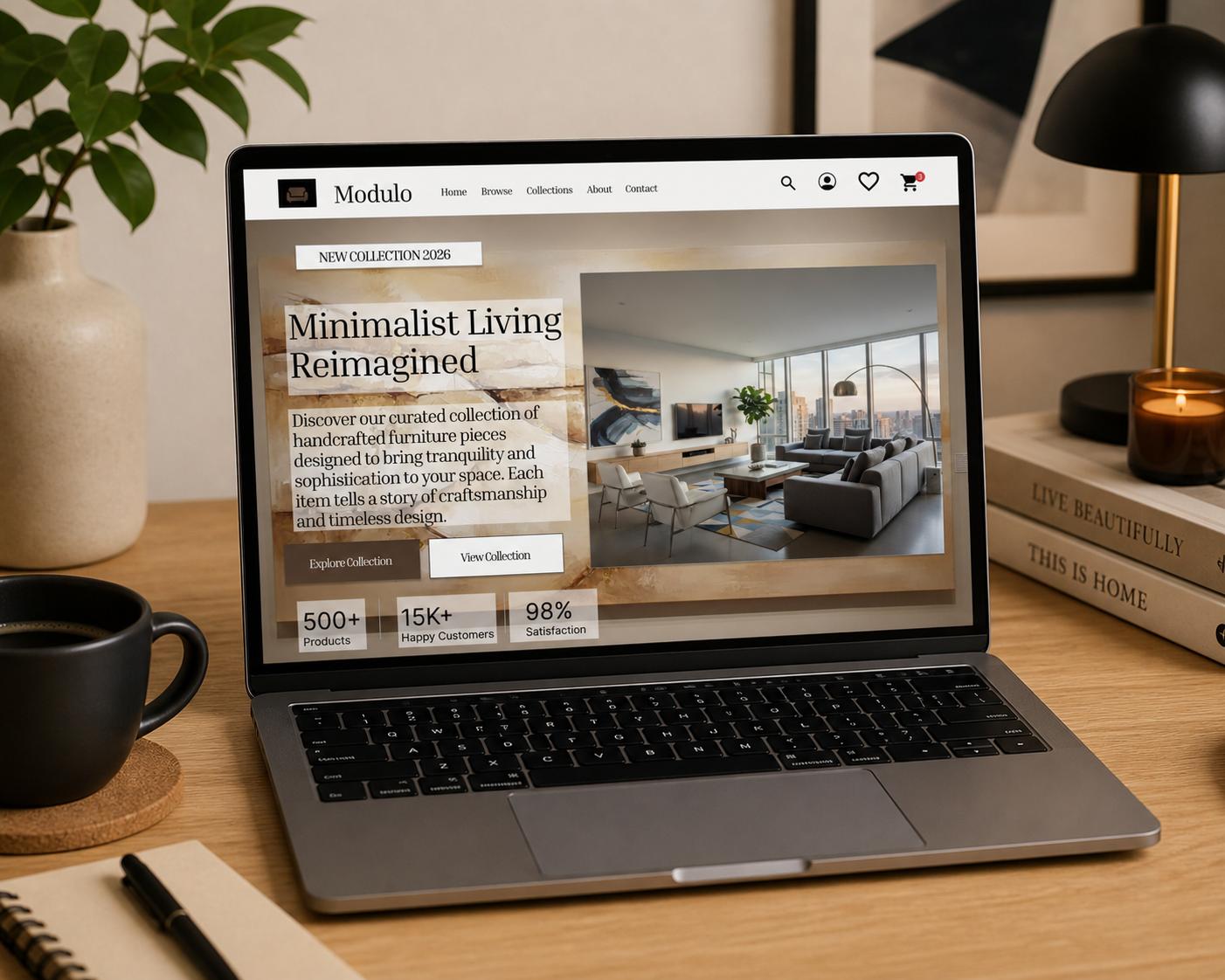
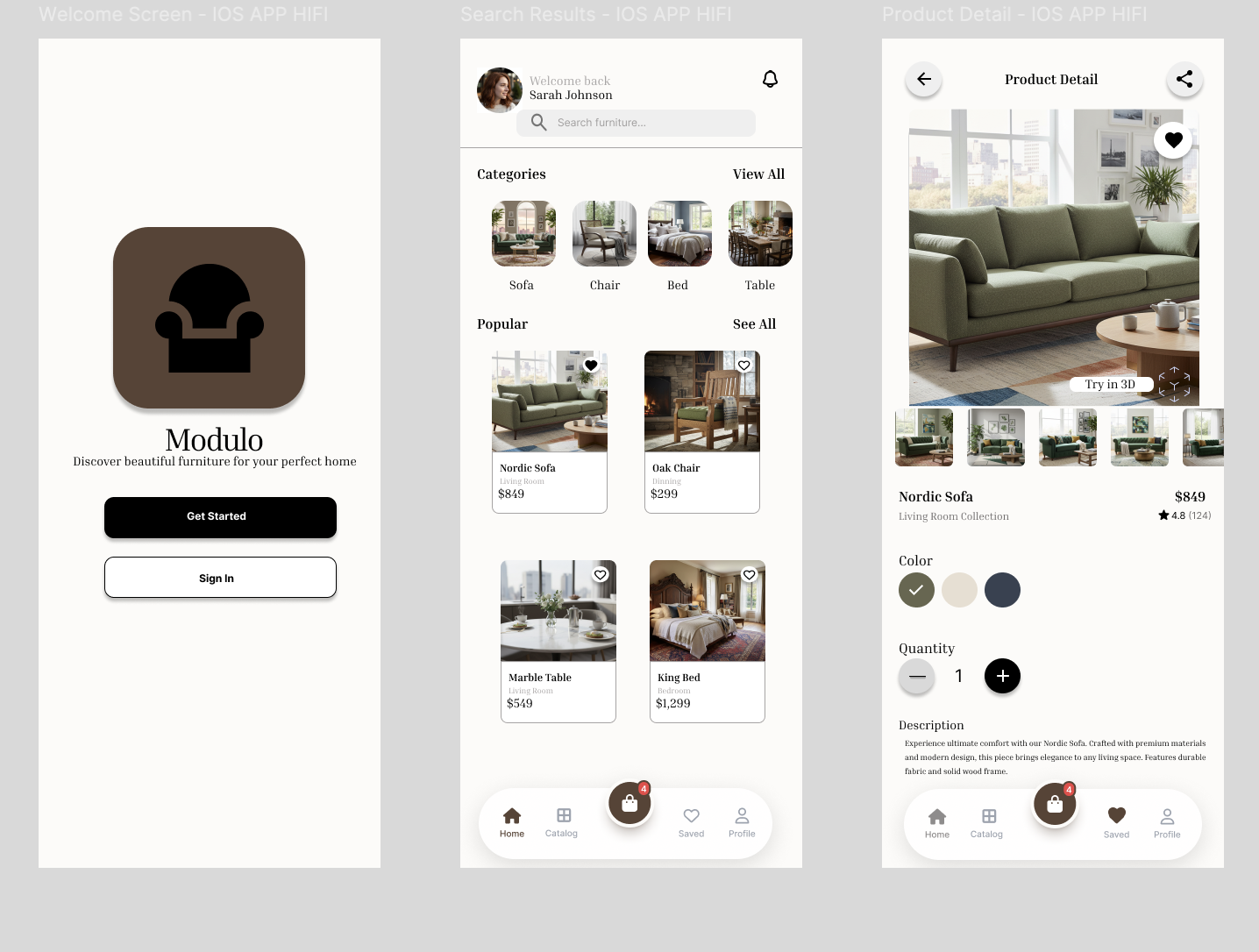
Modulo is a modern furniture website and mobile app designed to help users discover, compare, and shop for furniture in a simple and visually engaging way. The project focused on creating a clean, user-centered shopping experience for people who want stylish furniture without feeling overwhelmed by complicated browsing, unclear product information, or frustrating checkout experiences.
User Research
I conducted user interviews and competitor analysis to better understand user behaviors, needs, and frustrations when shopping for furniture online.
Key Research Insights
Users want clean and simple navigation
Product visuals strongly influence purchasing decisions
Customers value transparent pricing and shipping information
Real customer photos and reviews help build trust
Users struggle to visualize furniture scale within their space
Competitor Research
I analyzed platforms such as IKEA, Wayfair, and Pottery Barn to identify strengths, weaknesses, and opportunities for improvement.
Findings
Large product selections often overwhelm users
Product images do not always reflect real-life appearance
Filtering and navigation can feel cluttered
Delivery expectations are sometimes unclear
Wireframing & Prototyping
Using Figma, I created low-fidelity wireframes to map user flows and establish layout structure before moving into higher-fidelity screens.
User Flow
Users could:
Browse Products → View Product Details → Add to Cart → Checkout
Interactive prototypes were tested to evaluate usability, navigation clarity, and overall shopping experience.
Usability Testing
Testing revealed that users appreciated the clean layout and simple checkout flow, but wanted:
Earlier visibility of shipping costs
Better product visualization
Clearer cart feedback after adding items
Based on feedback, I refined the experience by improving product detail layouts, simplifying navigation, and enhancing checkout transparency.
Shopping for furniture online can often feel stressful and overwhelming. Users struggle with comparing products across multiple websites, visualizing furniture in their own space, understanding dimensions, and dealing with unexpected shipping costs or unclear delivery timelines.
Research also showed that many users rely heavily on product photos, reviews, and transparent pricing before making purchasing decisions. Existing competitors offered large product catalogs, but users frequently reported confusion, decision fatigue, and difficulty trusting what products would actually look like in real life.
The challenge was to design an experience that simplified furniture shopping while building trust and confidence throughout the user journey.
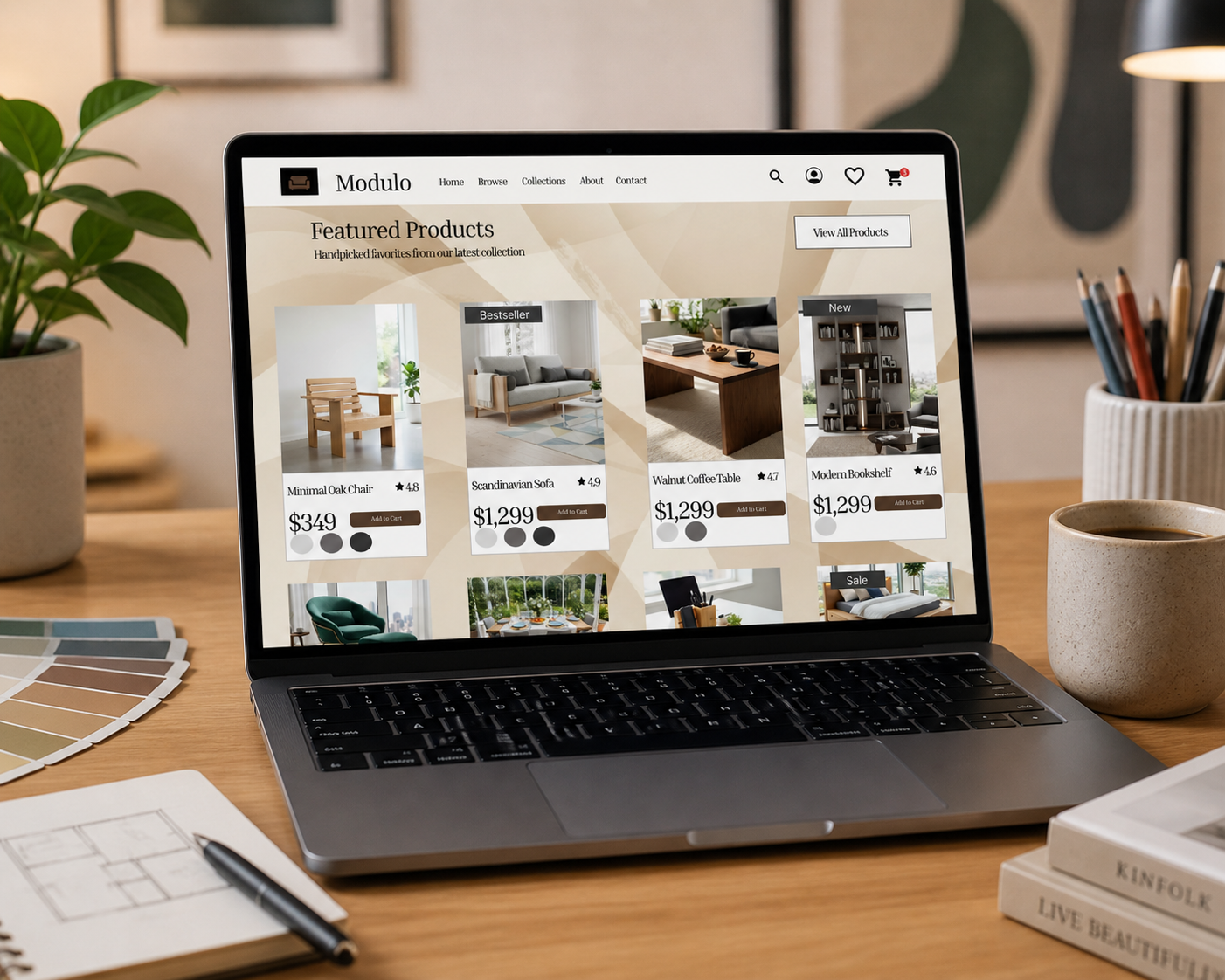
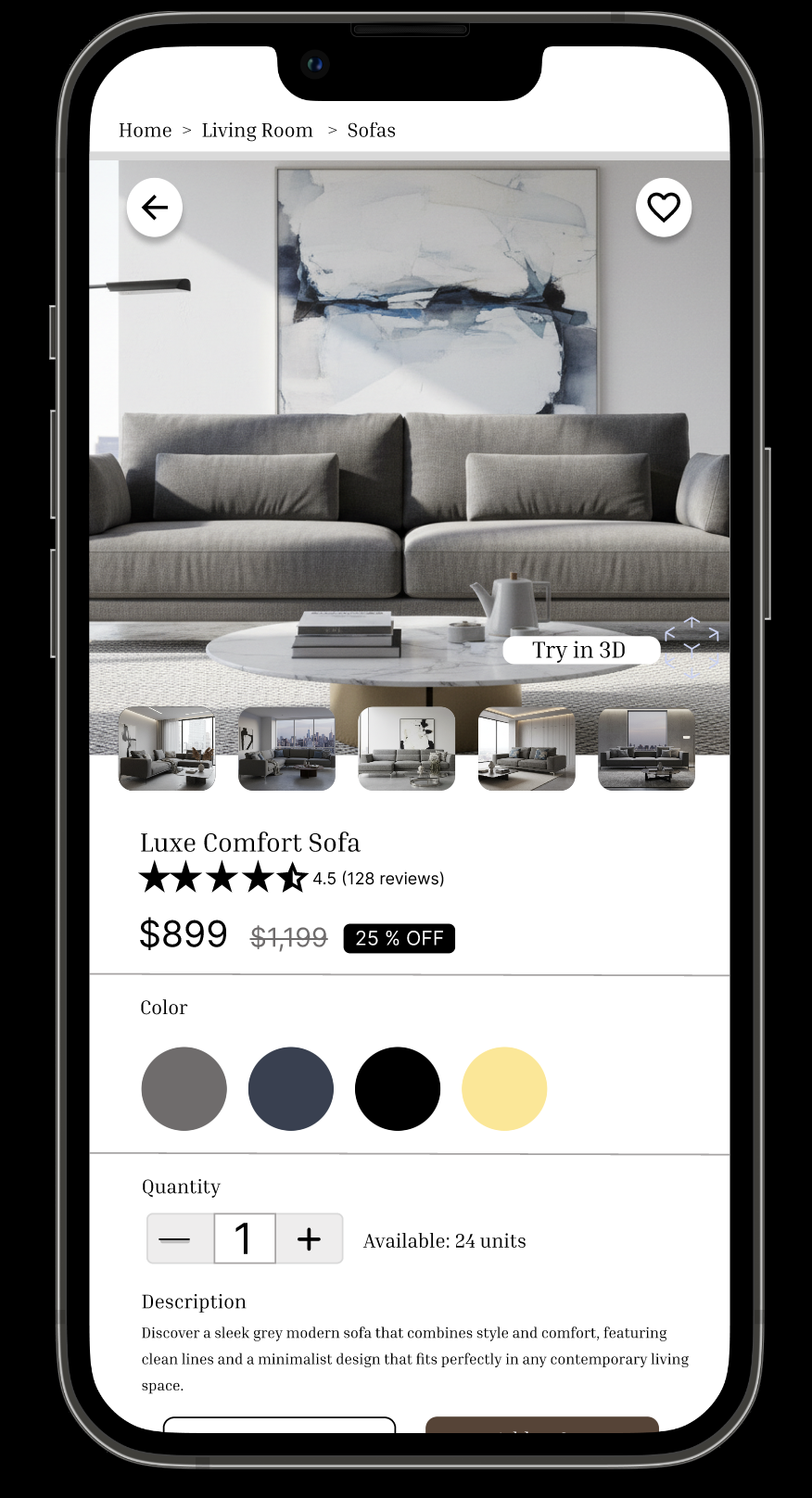
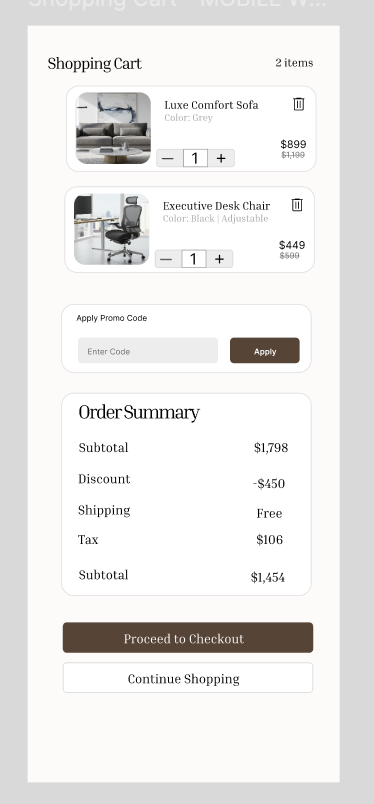
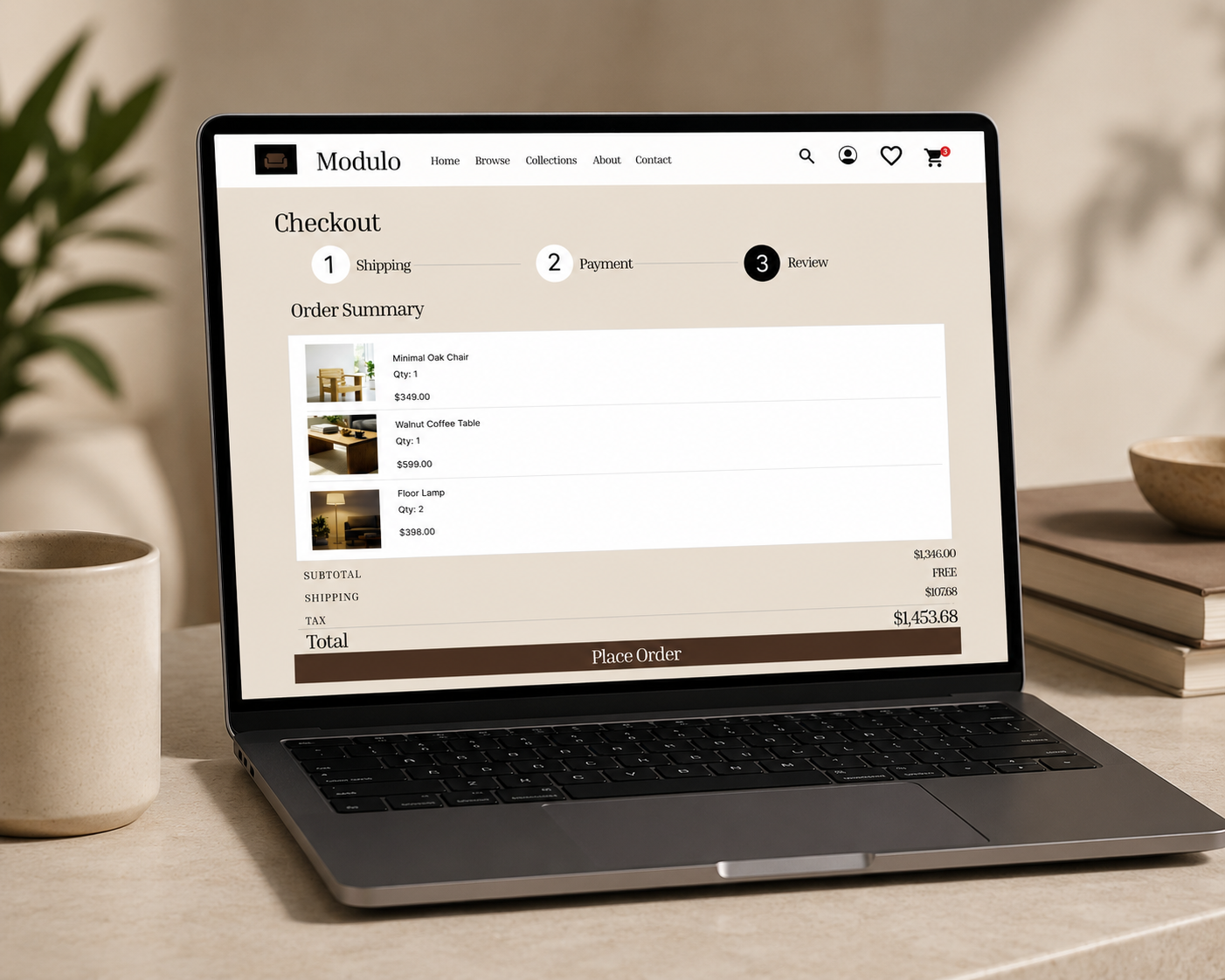
The final Modulo experience was designed to feel modern, minimal, and easy to navigate while helping users feel more confident shopping online.
Final Features
Clean and intuitive navigation
Product-focused layouts with strong visual hierarchy
Simplified browsing and checkout flow
Clear pricing and order summaries
Wishlist and favorites functionality
Responsive layouts for mobile and desktop
The design solution reduced friction during browsing and created a more trustworthy shopping experience by prioritizing clarity, simplicity, and user confidence.
This project taught me the importance of balancing aesthetics with usability in e-commerce design. While creating visually appealing layouts was important, the research showed that users cared even more about transparency, simplicity, and confidence during the shopping process.
One challenge was designing an experience that felt visually rich without overwhelming users with too many product choices or unnecessary interactions.
If I continued developing Modulo, I would explore features such as:
Augmented reality furniture previews
AI-powered recommendations
Expanded filtering and personalization tools
Real customer photo galleries
Overall, this project strengthened my skills in UX research, wireframing, prototyping, usability testing, and creating responsive user-centered experiences.